
Expert Methods for Cleaning a Clogged Sink Drain
Have you ever found yourself standing in front of your sink and wondering miserably as the water flows slowly past, why it is not running in the first place? A plugged sink may be irritating, messy and inconvenient- to be a plumbing disaster. Having the right strategy and some patience, one can make one’s sink drain a professional clean.
It may be a kitchen sink that has been experiencing the problem of grease accumulation or a bathroom drainage that has been blocked by hair. This step-by-step instruction will enable you to resume with a good draining system in the most efficient and safe way.
1. Determine the Reason Behind the Clog
Prior to initiating any cleaning technique, one should be aware of what could be blocking it. The grease, oil, food scrap and soap are common causes of clogging in kitchen sinks. The sinks in the bathrooms, on the other hand, tend to have hair, toothpaste, lead and scum of the soap. Determining the source will aid you in choosing the best cleaning solution as opposed to randomly trying various other cleaning solutions to see which ones work.
2. Flush with Boiling Water
The easiest and best starting point is to pour boiling water down the drain. Bring a full pot of water to a boil and then pour it out in small amounts over the drain with at least some pauses in between. This technique can be used to loosen soap accumulation and grease that is inside the pipes. It is more effective in case of minor clogs and routine care. But in case your plumbing is of PVC pipes, then be careful with very hot water, otherwise it can damage it.
3. Use Baking Soda and Vinegar
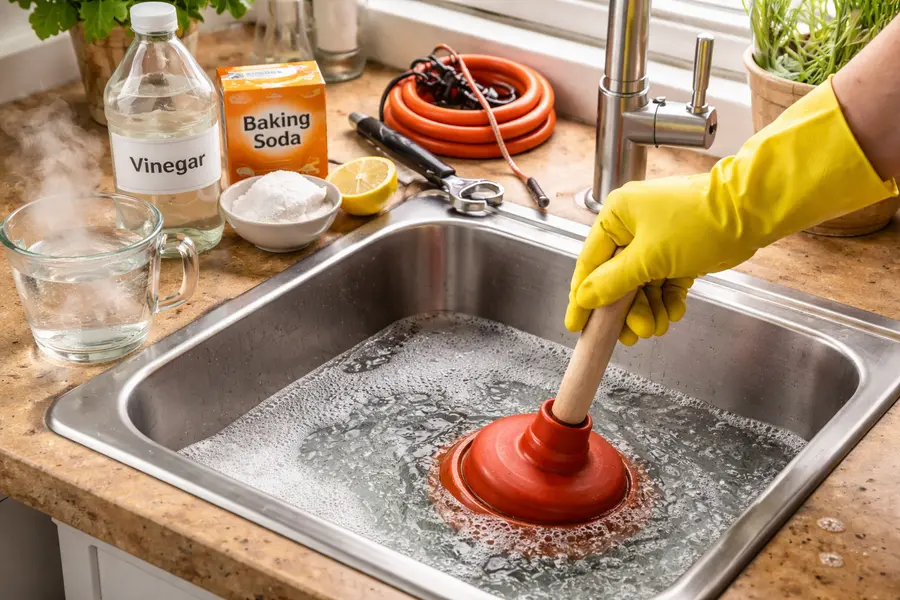
In case the use of hot water does not resolve the problem, it can be solved with the assistance of a natural cleaning reaction. Add approximately 1/2 cup of baking soda to the drains, then add a cup of white vinegar. Cover the drain immediately in order to contain the reaction going on. The chemical reaction assists in the dissolution of dirt and the unfreezing of debris in the pipe. Allow to rest between 15 and 20 minutes, then wash with warm or hot water. It is environmentally friendly, non-toxic to the pipes and most suitable for cleaning up a drain regularly.
4. Use a Sticky Stubborn Blockage Plunger
In more difficult clogs, a plunger may be employed whereby enough force of suction is exerted to remove debris. Ensure that the plunger is submerged in lots of water in the sink. Plunge a plunger in the drain and pump it up and down as quickly as possible. The pressure and suction may assist in the loosening of the clog and the flow of water may be resumed. Repeat it many more times, as many times as required to get better results. For homeowners or offices seeking professional assistance, a bond cleaning service can also handle stubborn clogs efficiently, ensuring a spotless and fully functional sink.
5. Clean the P-Trap Manually
When the obstruction is not removed, the problem can be trapped in the P-trap- the curved pipe that is found below your sink. Put a bucket under it to receive any water and unscrew the tap and take the tap off. Removed all debris, accumulation or dirt inside of the pipe with a brush or cloth. When it is well washed, reconnect the trap. Although this step can appear technical, it is a reasonably easy task and is usually helpful in the resolution of deeper clogs.
6. Cleaning Toler or Drain Snake
A drain snake or flexible drain cleaning equipment may be extremely effective in removing the clogs that are further inside the pipe. Slide the tool gently into the drain and twist it in order to snare the hair or debris. Take it out with your fingernails and remove the waste which has built up. It is one of the most useful tricks to use in the case of sinks in the bathroom because hair is a common concern. It is targeted at striking at the clog and not loosening it.
7. Use of Chemical Cleaners Should be Avoided
Though commercial drain cleaners are quick in their effects, when used frequently it may be rough on your plumbing system. In the long run, tough chemicals can damage pipes and be unsafe. In case you decide to use them periodically, you should pay attention to the instructions and never combine various products. But in the majority of cases, natural processes and mechanical instruments are much more harmless and as efficient as far as clogs at home are concerned.
8. Stop Future Drainage Problems
It is good to clean your sink drain, and better still, prevent. Do not pour grease or oil into kitchen drains, and a drain strainer should be used to eliminate food particles and hair. Declog your drain by flushing it for half a day with warm water. Clean sink stoppers regularly,and before the debris accumulates, clean the sink stoppers. These are mere habits which help to decrease the possibility of repeat clogs greatly.
9. Get rid of Unacceptable Drain Smells
The drain may not be blocked in certain instances, but it may give out a foul odor due to the buildup of bacteria. In order to eliminate odors add baking soda and lemon juice to the drain and allow it to sit for a few minutes. Clean with warm water, then. This will neutralise the odours by itself and make the sink smell clean.
Conclusion
You do not need to spend a lot of money and use some complicated methods to professionally clean your sink drain like a professional. With the knowledge of the cause of the clog and the systematic steps that should be taken, you will be able to deal with the majority of drainage problems without doubt. Keeping your home clean can also make sink maintenance much easier.
Related Posts
How to Make a Dust-free Home with 10 Best and Easy Ways?
Have you ever felt like, however much you clean, the dust comes back? And if…

Rental Inspection Cleaning Protocols for Property Managers
The responsibility property managers bear when readying rental homes for inspections is significant, as every visit…

How Can You Stop the Growth of Mould in Your Home?
Stop the Growth of Mould with Simple Home Tips Have you noticed any black spots…